Anúncios
Could a simple written note save you rehearsal time and change the way you build a performance?
You rely on video, but setting it up and replaying clips eats minutes you can’t get back. Many educators found that keeping a written record lets you reuse material years later and resolves disputes about when a pose lands.
Practical shorthand — SR/SL, US/DS, G1/G2, counts, brackets for repeats and cannon notes — helps you keep a clear, reliable map of movement. This makes rehearsals faster and frees you to watch your cast as a true observer.
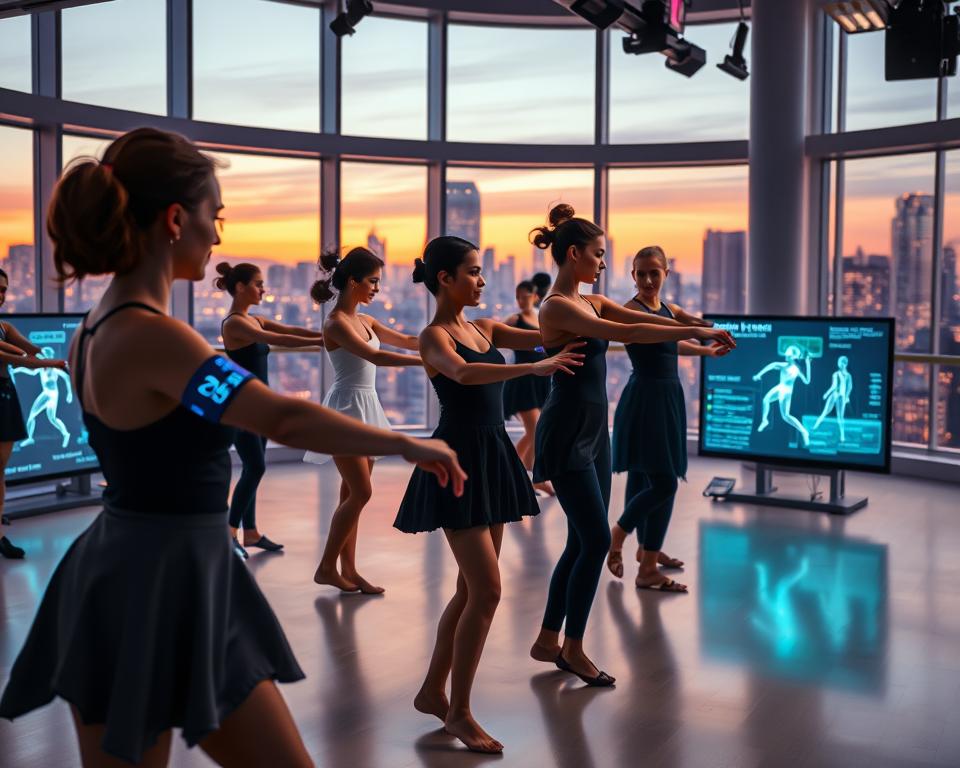
At the same time, virtual reality, motion capture, and digital projections have entered the field and sped up how choreographers share work across the world. You’ll see how these tools fit alongside timeless values in art, and how they let you design the audience experience before you set foot onstage.
In this guide, you’ll get practical wins: clearer notes, smoother rehearsals, and a balanced path to a future where tools amplify — not replace — your creative voice.
Anúncios
Why Technology Matters in Modern Choreography
Digital tools now let you sketch a full stage picture before anyone steps into the studio.
When you map movement in software or VR, you save rehearsal times and spot spacing issues early. This matters whether you work with a small cast or a large company. It gives you a clearer sense of how people read the stage and how the audience will experience the work.
From studio to stage: how digital tools reshape time, space, and performance
Use virtual previews to plan formations so your dancers read from every angle. Motion capture helps you analyze bodies and tighten dynamics between sessions.
Anúncios
User intent decoded: what you want to achieve with dance tech choreography
- Compress rehearsal times and reduce resets.
- Clarify spatial logic so transitions feel clean.
- Create durable documentation so timing and dynamics match your vision.
- Choose tools based on the age of your cast, venue scale, and the future value of portability.
Bottom line: pick the few tools that add clarity, not noise, and trust your artistic sense to guide the way.
Your Core Dance Tech Toolkit
Equip yourself with a few dependable tools so you can test formations, check sightlines, and lock down timing fast.
Virtual reality for spatial design
Walk the stage in advance. VR lets you preview how formations read from the audience point of view. You can check sightlines, spacing, and how lighting will affect silhouettes.
Use simple room-scale apps or mid-range systems to simulate venue depth before rehearsals begin.
Motion capture and sensors
Basic sensors and mocap rigs reveal weight shifts and timing with clarity. That data helps you refine style and dynamic contrast.
Capture runs, compare takes, and keep a library that preserves movement for future performances.
Digital projections and video
Pair projections with movement so visuals amplify the narrative, not overpower performers. Record rehearsals with a lean video plan to avoid editing bottlenecks.
Notation systems and apps
Adopt a lightweight system: SR/SL, US/DS, G1/G2, bracketed repeats, and lyric markers. This shorthand resolves count disputes and makes your notes reusable.
- Preview formations in VR.
- Use sensors to measure motion quality.
- Pair video with a short written system for fast recalls.
Example: map a phrase to lyrics when counts feel fuzzy, then store projections and notes in a shared folder. For research and tools, visit the ChoreoTech Lab for practical references.
How to Build a Tech-Enabled Choreography Workflow
Begin with the music: mark phrases and accents so every step has a clear anchor in time.
Plan in counts, lyrics, and time
Label sections A, B, C and map counts or lyric cues to each phrase. Use brackets for repeats and letters for start/stop points so the team reads the same map.
Note cannons plainly — for example, “Cannon SL to SR” — and choose the method that makes every step repeatable in rehearsal minutes.
Design space and formations
Sketch simple formation diagrams with arrows, group tags (G1, G2), and SR/SL or US/DS abbreviations. That system keeps transitions readable at a glance.
Mark hands, facings, and levels consistently so subs can step in from your record without confusion.
Rehearse, refine, and record
Balance quick video takes with handwritten notes. Start with a warm run, mark corrections by hand, then capture one clean take near the end.
Troubleshoot specific problems by referring to your notes instead of rewinding endlessly. This routine saves minutes each class and builds a reusable template for future work.
- Map music to counts or lyrics for clear steps.
- Compress repeats with brackets and label sections.
- Use group tags and stage abbreviations for quick reads.
dance tech choreography in Action: Proven Methods and Examples
Case studies make it clear: measured integration beats gadget overload. You’ll look at how real projects paired human movement with simple control systems to heighten impact without losing the art.
Pilobolus x MIT CSAIL: drones as partners
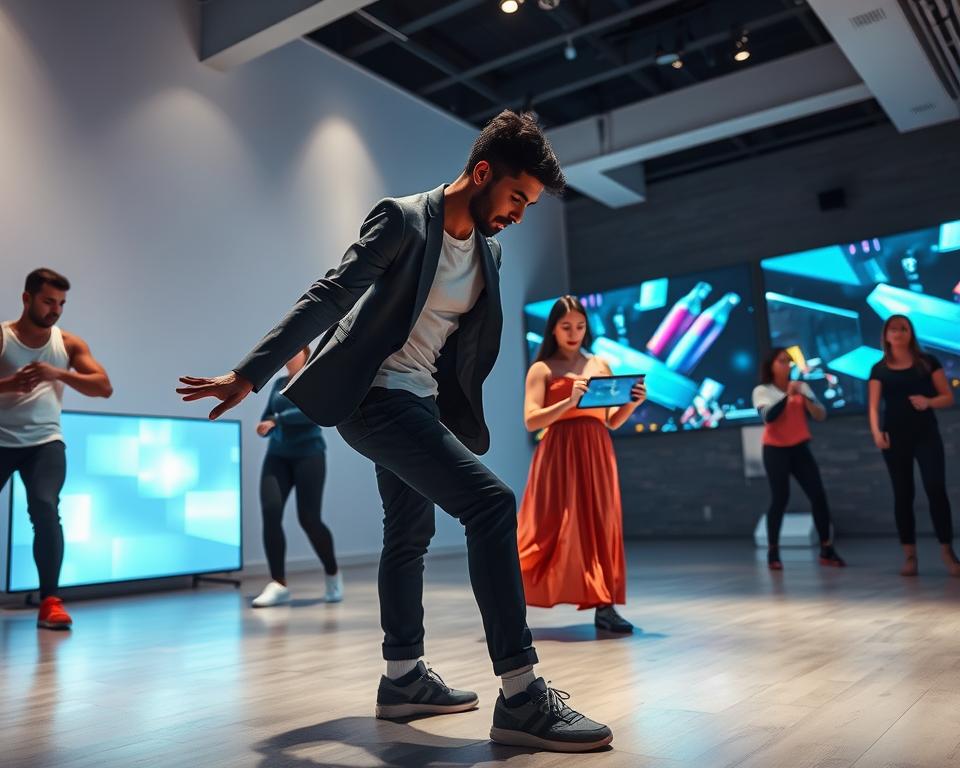
In 2011 Pilobolus and MIT’s CSAIL created “Seraph,” where a soloist shared stage space with two quadcopters flown offstage. That work is a strong example of how motion and media can interact with a human body safely and artistically.
Wearables and LEDs: crowd-scale pixels
“UP! The Umbrella Project” used LED-lit umbrellas to turn hundreds of people into pixel-like formations. STEM From Dance then taught students to code costumes so non-performers could execute patterns with simple controllers.
Takeaway checklist
- Study a performance where drones acted as duet partners.
- See how groups became human pixels with LED umbrellas.
- Test simple controllers, latency, and sightlines before full staging.
- Decide where a small tech layer adds true power to a moment.
- Use pilot runs in rehearsal as a safe way to scale up work.
Use these examples to shape your questions about where projection, drone path, or a light-triggered cue could heighten the audience experience in your next piece.
Teaching, Community, and Real-World Settings
In classrooms, a few clear lines on a page often fix more confusion than a long video rewind.
Teachers report that kids need frequent reminders. Quick written notes stop the “what count is that?” problem and save class time.
Make a short cue sheet that any choreographer or sub can read. Add hand and arm naming conventions to keep style consistent across levels.
- Pair shorthand with a simple formation sketch so dancers re-enter confidently after absences.
- Decide when to film: take video after class when on-the-spot work makes writing impractical.
- Use affordable kits—phone on a tripod, LED wearables, basic projection—to boost school showcases.
Community programs matter. STEM From Dance blends coding, LEDs, and culture to increase engagement and make the work feel relevant to students’ lives.
Address memory lapses with cue sheets and quick re-teach blocks. Save your best combinations as a record so you can reuse them years from now.
Conclusion
You’ve got a clear, small system that works. Pair brief video with concise written notes and simple abbreviations to save minutes in rehearsal and build a lasting record you can pull up years later.
Pick the right tool for each part: use VR or previews for spacing, notation for counts, and a single clean take for performance capture. Test projections, LEDs, or drones on the side so groups and people stay safe and aligned.
Start with one small step next time—try a new note format or a formation check. For more on how technology shapes modern practice, see this overview on the impact of technology on choreography.