Anúncios
You can change how your body moves by adding short, doable actions to your day. Small routines beat occasional marathon sessions because they build consistency and make gains feel natural.
Stretching eases stiffness, supports joint range, and helps you move beyond usual patterns. Do dynamic moves before workouts and hold gentle, static stretches after exercise when tissues are warm.
Expect progress to come over weeks, not days. Use simple tools like a foam roller, a timer, or a quick post-workout session to keep momentum.
These steps let you enjoy the real benefits: less tightness, more comfort during movement, and better overall health. Plan short sessions around your morning, after training, or before bed so the practice fits your life.
Over time, small choices add up. With a steady approach, you’ll notice meaningful change and feel more capable in everyday activities.
Anúncios
Why daily stretching matters for your range of motion and mobility
Small daily stretches change how your body moves.
Regular stretching expands your range and motion, making simple tasks—like reaching a high shelf or turning to check your blind side—feel easier. Daily work boosts circulation, sending oxygen and nutrients to your muscles and joints. That helps reduce soreness and shortens recovery time after exercise.
Dynamic stretches before activity prep connective tissue and muscles for effort. After your workout, static holds help lengthen tight tissue and support posture and balance. Do short breaks from sitting to protect hips, hamstrings, and chest from getting tight.
Anúncios
- Better mobility: a consistent routine lowers your injury risk during activity and exercise.
- Less back and hip stiffness: improved circulation soothes sore areas and aids recovery.
- Quick leg and knee wins: opening hips and hamstrings increases comfortable range for daily movement.
Know the sign: you should feel gentle tension, never sharp pain, while you hold a stretch on each side. For guidance on safe techniques and timing, see this stretching guide.
Build a simple stretching routine you’ll actually follow every day
Start with a simple plan: quick morning moves, targeted cool-downs, and a gentle evening unwind. Keep each part short so you can repeat it without excuses.
Quick morning mobility — five minutes
Quick morning mobility: five minutes to loosen tight areas
Cycle gentle movements for your back, hips, and arms. Hit each side for 20–30 seconds so you wake tissues without forcing range.
Post‑workout cool‑down — static holds
Post‑workout cool‑down: static stretches to increase flexibility
After a workout, pick the leg and upper-body areas you trained. Hold each stretch at least 30 seconds and up to 1–2 minutes to cement gains.
Evening unwind: gentle holds to reduce tension and stress
Finish the day with calm stretches and slow breaths. This signals your body to recover and often helps you sleep looser the next morning.
- Use a simple timer so your minutes add up without thinking.
- Rotate a small set of exercises to keep the routine fresh and targeted.
- Do one or two light foam‑rolling passes before some stretches to help muscle release.
- Follow the “little and often” approach: brief daily work beats long, rare sessions.
Know when to use dynamic vs. static stretching
Choosing the right action at the right time helps your body get the most from training.
Before activity: dynamic movements to prep joints and muscles
Use active reps like leg swings, hip openers, and butt kicks. These movements raise tissue temperature and wake your nervous system. Repeat steadily to explore comfortable range without long holds.
After activity: static holds to lengthen muscle groups
Hold end-range positions without bouncing. Do each static stretch at least 20–30 seconds and repeat 2–4 times. This is most effective when tissues are warm after a workout.
- Match prep to your session: runs need hip openers and leg swings; upper-body workouts use arm circles and shoulder patterns.
- Progress dynamic reps slowly—don’t force your end range—to prime motion before training.
- Keep breathing calm during holds so each stretch feels effective instead of guarded.
| Feature | Dynamic | Static |
|---|---|---|
| Primary purpose | Raise temperature, activate muscles | Lengthen tissue, reinforce range |
| Best timing | Before activity or workout | After activity or training |
| Common moves | Leg swings, hip openers, arm circles | Hamstring hold, doorway chest, calf stretch |
Target the major muscle groups that limit your motion
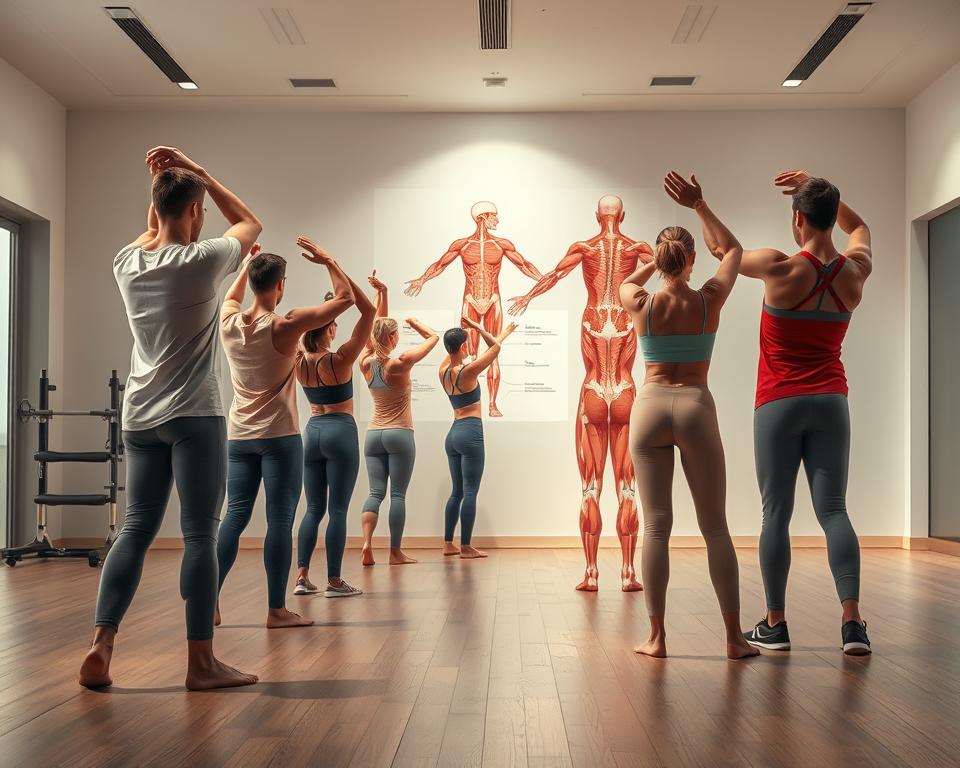
Zeroing in on the most limiting muscle groups makes each stretch count. Start with a small menu of targeted moves so you free ranges that affect walking, reaching, and posture.
Hips and hip flexors
Piriformis figure‑four and gentle hip openers reduce deep hip tension. These stretches free leg mechanics and can ease knee strain during walking or running.
Hamstrings and calves
Use a toe‑touch variation and a calf wall stretch to lengthen the backside chain. Change the foot position and lean angle on each side to find the best spot without stressing joints.
Back and chest
Child’s pose helps decompress the back and hips. Add a doorway chest stretch to open the chest and improve posture and breathing mechanics.
Neck and shoulders
Try chin tucks and a cross‑body shoulder stretch to relieve screen‑time tension in the neck and arms. Hold at mild discomfort, never pain, and keep movements calm.
- Focus areas: hips, hamstrings, back, chest, neck, and shoulders.
- Progress slowly: scan for mild stretch sensations and avoid joint pulling.
- Keep a small routine: track which exercises unlock stubborn parts so you can repeat what works.
Flexibility improvement habits you can track by the day and week
Use a simple checklist to turn brief stretches into measurable wins. Start with three cues: morning, post‑training, and evening. Log the time and times you stretch so the week adds up without fuss.
Aim for 20–30 minutes total several times per week. Hold static stretches 30 seconds up to 1–2 minutes. Give tight areas daily or twice‑daily attention if they limit your movement.
Rate tight spots—hips, hamstrings, chest—so you focus on the muscles that most affect your mobility and health. Add 3–4 quick foam‑rolling passes before sticky areas to make each stretch feel smoother and more effective.
- Keep it simple: short sessions on busy days, longer ones when you have time.
- Pair with training: stretch the muscles you worked that day to help recovery and ability to move.
- Measure progress: note easier sitting, standing, and daily movement—not just reach distance.
For app ideas that help you track a routine and time, try this best flexibility apps.
How long to hold a stretch and how many times to repeat
Hold times and repeat counts make each stretch session count. Use clear timing targets so your muscles and joints know what to expect.
Hold guidelines
For static work: hold 20–30 seconds at minimum and push up to 1–2 minutes when you want deeper gains. These seconds build a steady signal to soft tissue while you breathe calmly.
Repetitions and total minutes
Repeat each stretch two to four times. Tally the minutes per session so you reach a useful total without overdoing it. Start with large groups first, then finish smaller areas like the neck and arms.
Safe limits and feeling
Ease into the end of range slowly and stop if you feel sharp pain or joint pressure. Aim for mild discomfort, never pain. Hold the same position on each side to keep balance and reduce risk.
| Element | Guideline | Why it helps |
|---|---|---|
| Hold time | 20–30 seconds; up to 1–2 minutes | Signals muscles and connective tissue to adapt |
| Repeats | 2–4 times per stretch | Builds total minutes without fatigue |
| Safety cue | Mild discomfort, not pain | Protects joints and reduces injury risk |
Tools and techniques that boost your stretching routine
Start sessions with targeted myofascial work to help your muscles accept new range.
Foam rolling can yield quick, short‑term gains similar to stretching. Roll the same areas you plan to stretch so circulation rises and tissue stiffness drops.
Foam rolling and self‑myofascial release to prime tissues
Choose a roller, stick, ball, or a percussion device that fits your body and the area you’ll target.
- Do 3–4 slow passes along the leg lines, back, or around the knee, then add small side‑to‑side rocking over tender spots.
- Keep sessions short — a few minutes — so you spend most time on actual stretches and exercises.
- Slot rolling before dynamic movements and again as a light reset before post‑training static holds.
- Avoid pressing on joints or bony spots; adjust pressure so the body relaxes instead of bracing.
| Tool | Best for | Key tip |
|---|---|---|
| Foam roller | Back, quads, hamstrings | 3–4 passes, then rock |
| Massage ball | Glutes, calves | Small, controlled pressure |
| Massage stick | Shins, thighs | Layer into warm-up |
Pair these techniques with simple exercises that keep the new range active so gains last beyond one session.
Lifestyle tweaks that protect your joints and reduce injury risk
Simple shifts in how you sit and move can lower the chance of strains and keep your back happier.
Stand, walk, and vary position hourly. Long sitting shortens muscles and builds tightness in the hips and chest. Get up at least once an hour or use a standing desk so your body does not lock into one position.
Stand, walk, and vary positions to combat long sitting
Break long stretches of sitting with brief walks and gentle marches. Add arm swings or shoulder rolls to ease tension that builds across the day.
Do a short walk after lunch and a quick set of easy exercises mid‑afternoon. These quick movement snacks help your muscles stay ready for activity and lower injury risk.
Warm up gently before workouts to increase blood flow
Warm up with light dynamic movements before training or a workout. This raises tissue temperature and wakes the nervous system.
Save static stretch holds for your cool‑down. That way you protect joints and support better muscle lengthening after exercise.
- Focus chest opening and hip mobility to offset desk posture and help knees and shoulders track well.
- Progress slowly and stop when you feel early fatigue to cut down on injury risk.
- Tie these tweaks to daily anchors like meetings, breaks, or commute transitions so they stick.
| Action | Why it helps | How often |
|---|---|---|
| Stand/Change position | Reduces back and hip stiffness | Every 30–60 minutes |
| Movement snacks | Lowers tension, wakes muscles | 2–4 times daily |
| Dynamic warm‑up | Raises blood flow before exercise | 5–10 minutes before workout |
| Static cool‑down | Supports post‑training range | After activity, 20–60 seconds per hold |
Conclusion
A strong, steady routine of short sessions is the most practical way to increase flexibility and keep it working for your life.
Do dynamic prep before activity and hold static stretches after. Aim to hold stretch positions at least 30 seconds (up to 1–2 minutes), repeat a few times, and log minutes across the day. Use foam rolling to prime tissues so exercises and stretching feel smoother.
Be guided by mild discomfort, never pain, and give yourself weeks of steady work. The real benefits you’ll notice are better range and motion, fewer stiff mornings, and a freer back, hips, leg lines, and arms—safer gains that lower injury risk and support long‑term fitness and health.