Anúncios
dance community guide 2025 opens with a simple question: can a thoughtful mix of in-person and online connection truly deepen your movement, performance, and lifelong learning?
You will find this guide educational and practical. It explains why building strong groups matters now, how mentorship and open communication boost motivation, and how welcoming spaces improve confidence for every level.
This roadmap helps you design classes, events, feedback systems, and practice plans that support steady progress — not instant success. You’ll see clear progressions across styles like contemporary dance, ballet, hip hop, and West African forms, with respect for origin and context.
Later sections cover foundational culture, inclusive programming, level progression, real case studies, production and performance links, digital tools, marketing, safety, and funding. Updated examples include free local classes and youth showcases that tie training to stage experience.
Balance practice with rest, seek qualified instruction, and use this guide to map next steps, build supportive relationships, and enjoy the art and form together.
Anúncios
Key Takeaways
- Strong groups lift learning, skills, and confidence for beginners and advanced movers.
- This is an educational roadmap to design sustainable classes, events, and feedback.
- Mentorship, ambassadors, and online hubs help retention and belonging.
- Expect sections on styles, progressive leveling, production, safety, and funding.
- Balance practice with rest and work with instructors who tailor guidance to your goals.
Introduction: Why a Dance Community Matters in 2025
In a year shaped by hybrid classes and flexible schedules, your local group can be the steady place where technique and trust grow. Showing up with others gives you clear practice time, peer support, and focused feedback that helps your movement improve faster.
Context, trends, and your goals this year
Hybrid programs and accessible digital tools make training easier to fit into life. You can pair streamed technique sessions with in-studio rehearsals to balance convenience and hands-on coaching.
How community elevates learning, performance, and retention
A welcoming group links peers, mentors, and instructors in open feedback loops. That structure boosts confidence, keeps you accountable, and readies you for performance while increasing long-term engagement.
Anúncios
What you will find in this ultimate resource
Inside this guide you’ll get clear sections on cultural context and styles, progressive class pathways, events and production, digital tools, marketing, safety, metrics, and funding. Practical tactics—ambassadors, collaborative projects, and regular meet-ups—show you how to make the art form part of your routine.
Start small: pick two actions to try this month and track what helps your learning and movement across styles.
Foundations of a Thriving Dance Community
Healthy group culture starts with small rituals that make every person feel seen and safe when they step into class. Those rituals set expectations and make it easier for you to try new movement without fear.
Sense of belonging, motivation, and confidence-building
Define clear norms for greetings, pronouns, and supportive language so everyone knows what to expect. Assign welcoming ambassadors to greet new members, explain routines, and lead simple icebreakers that lower anxiety.
Celebrate effort and progress with low-pressure rituals: a spotlight wall, shout-outs, or milestone badges. These small rewards boost motivation and help you notice real learning and skills growth.
Welcoming culture and open communication in your space
Set up a few reliable feedback tools: an anonymous suggestion box, monthly town-hall chats, and short feedback sessions after rehearsals. Use guidelines that ask for kindness and specific observations, not judgment.
- Publish a living code of conduct and clear reporting channels to protect privacy.
- Train staff in inclusive language and access needs to make classes welcoming for all ages and levels.
- Evaluate culture quarterly using retention, participation, and comments to adjust what’s working.
Practical action: start with one ambassador, one icebreaker, and one anonymous feedback channel this month. Small steps create steady trust and stronger connections across your dance communities.
Styles and Cultural Context: Building Respectful, Diverse Programs
Start by mapping styles and cultural roots so your program teaches technique while honoring origin and lineage. Begin each unit with a short, factual history and a note about who shaped the form.
Contemporary, Ballet, Jazz, and Hip Hop
Outline core techniques, alignment cues, and safe progressions for each dance style. For contemporary dance and ballet, include structured levels like a university model: basic to advanced technique labs.
Give credit to lineages and recommend hiring qualified teachers with verified training. Add short exercises that link technique to musicality and expressive choices.
West African and African-based Forms
Explain polyrhythms, call-and-response, and community-centered practice in plain terms. Pair live or recorded drumming with respectful protocols and context so learners understand cultural meaning.
Encourage collaboration with tradition bearers and percussionists to keep teaching accurate and ethical.
Social and Partner Forms
Teach Waltz, Swing, Tango, Cha-Cha, and related social steps with clear lead-follow principles. Focus on connection, timing, and accessible progressions for beginners.
Adaptive and Inclusive Instruction
Offer seated, supported, and standing options and partner with organizations that specialize in inclusive methods. Use checklists that assess functional movement quality, not appearance.
- Unit structure: history, technique, music, and lab practice.
- Respect protocols: attire and hair guidelines, no stereotypes, and lineage credit.
- Assessment: step and techniques checklists focused on safety and expression.
Designing a Progressive Class Pathway from Beginner to Advanced
Create step-by-step level criteria that make placement fair, transparent, and motivating. Use observable markers—control, coordination, timing, spatial awareness, and retention of steps—to place students into beginner, intermediate, intermediate-advanced, or advanced level bands.
Technique tracks and checkpoints
Structure clear tracks like Ballet I–III, Contemporary I–VI, and a Hip Hop technique and theory path. For each cycle, list sample goals: phrase memorization, dynamic range, musical phrasing, and safe progressions to harder skills.
Somatics, conditioning, and electives
Include Pilates Mat I–II and Functional Anatomy to build body awareness and reduce overload without offering medical advice. Add electives—Music Fundamentals for Dancers, Composition, and Screendance Production—to broaden artistry and stage or screen translation.
Progress, reviews, and learning styles
- Bridge classes and repertory labs support intermediate advanced transitions.
- Term goals are attainable and measurable; provide feedback letters after placement reviews.
- Align teaching to varied learning styles with visuals, counts, and imagery to reinforce technique and movement skills.
Inclusive Programming for Different Age Groups and Abilities
Create pathways that respect different age groups and abilities, making practice safe and joyful for learners at every stage. Start with predictable class flow and clear choices so students know what to expect and can opt in at their comfort level.
Family sessions, youth pathways, and adult tracks
Design family sessions that invite caregivers and kids to explore simple dance steps, rhythm play, and shared discovery. Offer youth pathways with age-appropriate goals and clear transitions between levels.
For adults, provide flexible schedules and entry points that honor work and life demands. Keep classes short, focused, and skill-building so progress feels real.
Adaptive movement and trauma-informed, culturally responsive teaching
Include seated and supported sequences, variable tempos, and consent-based partnering. Use predictable cues, choice-based participation, and language that centers agency and respect.
- Invite diverse music and movement references to honor student backgrounds.
- Brief families on access features—ramps, rest areas, captions for digital content—and gather feedback regularly.
- Train staff in redirection and referral practices; when needed, share specialized supports or professional resources.
Embed simple surveys to track learning comfort, movement confidence, and participation across age groups. For trauma-informed methods and practical teaching strategies, see this resource on teaching approaches: trauma-informed methods.
Community Dance Events Case Study: DANCECleveland Community Dance Day 2025
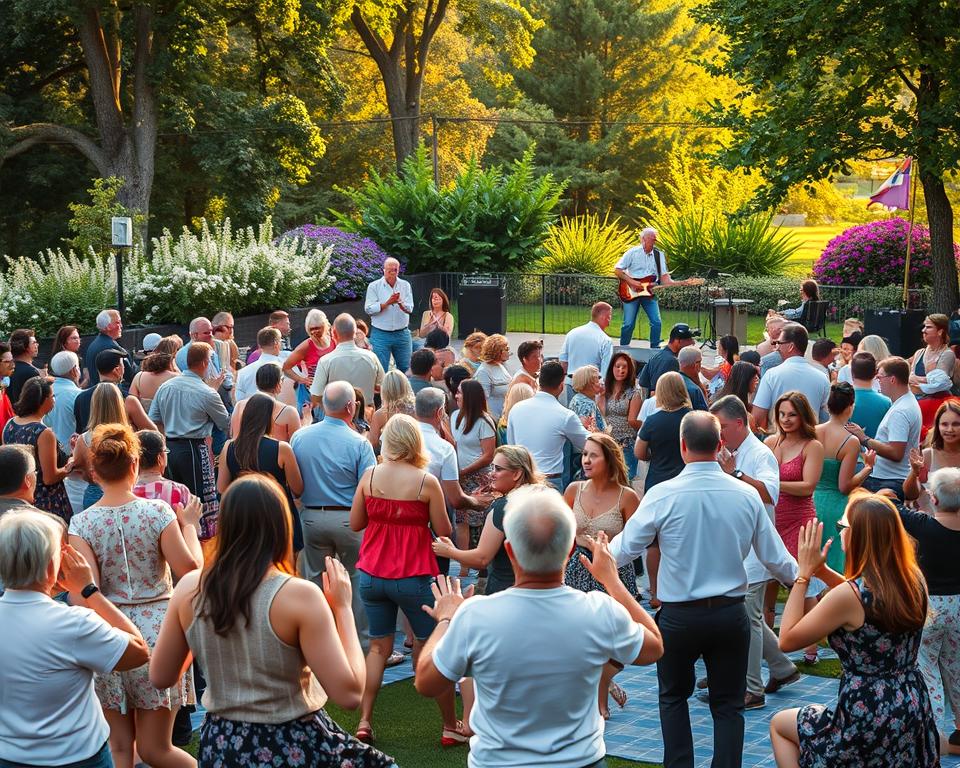
A citywide event can balance open classes and staged showcases to serve learners and audiences in one practical day. DANCECleveland filled Playhouse Square on Saturday, July 26 with more than a dozen free activities that reached beginners, families, and experienced students.
All-ages classes and family options
The morning featured all-ages activities: contemporary dance, ballet, hip hop, Pilates, African Drum & Dance, Flamenco, Stepping, and Family Dance. Family sessions emphasized welcome, simple steps, and joyful movement so caregivers and kids could learn together.
Intermediate and advanced sessions; youth showcase
After midday, organizers offered intermediate advanced and advanced level sessions (ages 14+), including Advanced Musical Theatre, Advanced Ballet, Advanced Jazz, and Advanced Contemporary/FOCO TECHNIQUE.
At 3 pm, selected students performed a free youth showcase in the Allen Theatre, presenting a wide range of styles for a professional dance performance experience.
Operations blueprint: schedule, roles, and rain plans
Model the schedule with open morning classes, level-staggered afternoon labs, and an evening performance. Roles included teaching artists, stage managers, crew, and ambassadors who handled check-in and flow.
When weather threatened, Plaza sessions moved indoors to Helen Theatre (1501 Dodge Court). Clear wayfinding and alternate entrances off Dodge Court/East 15th Street and the KeyBank Concourse kept the day on track.
Practical takeaways you can adapt
- Centralize venues to reduce transit time and share staff.
- Publish a district map so students and families find classes and performance spaces.
- Stagger levels to give beginners access while offering advanced training for more experienced students.
- Include adaptive instruction and close the day with a community performance that celebrates all participants.
Track basic metrics—attendance per class, student and audience feedback, and post-event interest in ongoing classes—to measure impact and plan next steps. For program examples and local partnerships, see Cleveland City Dance.
Mentorship and Feedback Culture that Accelerates Growth
A clear mentorship ladder and simple feedback rituals speed learning and keep students curious. Build systems that help you give and receive notes without stress.
Peer mentors and welcoming ambassadors
Formalize a mentorship ladder: pair newer students with peers one level up and offer optional faculty check-ins. Rotate matches each term so you meet more people and learn varied approaches.
Train welcoming ambassadors to greet newcomers, explain class norms, and model inclusive language. Ambassadors help set tone, reduce anxiety, and point students toward resources.
Constructive feedback methods for classes and rehearsals
Adopt the simple framework: observe, describe, suggest. Anchor every note to a learning goal or a concrete skills task so comments stay specific and usable.
- Schedule short feedback windows during class or rehearsal with time limits and brief written notes.
- Encourage reflective journaling after sessions to turn feedback into action plans for practice.
- Celebrate incremental gains while discouraging direct comparison between students.
Review quarterly using student surveys and quick metrics to refine pace, clarity, and support. This keeps your feedback loop responsive and focused on steady learning.
Performance and Production: From Studio to Stage
Bring your choreography to the stage with production steps that prioritize safety, clarity, and collaboration. Plan shows as learning cycles so every rehearsal builds toward a clear event date and outcomes.
Showcases, collaborative projects, and repertory labs let you link class practice to public performance. Start with informal sharings for beginners, then add staged showcases and repertory labs for higher levels. Use a timeline: choreography drafts, run-throughs, tech rehearsal, and dress run.
Lighting, sound, and scenography essentials
Keep tech simple and intentional. Create early cue sheets, a basic plot, and a stage map. Work with qualified technicians when possible to stay safe and budget-wise.
Music and working with accompanists
Align tempo, phrasing, and dynamics with your music director or accompanist. Schedule at least one joint run with live music to match breaths, counts, and musical accents.
Screen work and documenting performances
For screen dance, plan camera framing, edit rhythm, and permission for recording. Treat documentation as part of your art form and secure consent from performers before distribution.
- Level-appropriate timeline: informal sharing → staged showcase → advanced-level repertory run with full tech.
- Safety checklist: taped marley seams, cable covers, spacing marks, and rehearsal runs that mimic show conditions.
- Assigned roles: stage manager, lighting operator, house manager—so students learn production skills beyond movement.
After each event, debrief with short written notes and a group discussion. Capture what worked, what to change, and next steps so performances feed future practice and technique growth.
Digital Tools and Online Community in 2025
Well-run online spaces extend your studio values and make regular practice easier to fit into busy lives. Use private, moderated groups to protect privacy and keep interaction focused on learning and respect.
Private groups and moderated forums for safe engagement
Set clear rules for consent, content sharing, and reporting. Train moderators to de-escalate conflicts, remove spam, and direct serious concerns to your code-of-conduct channels.
Content strategy: practice clips, tips, and celebration posts
Plan a simple rhythm: short practice clips, quick technique tips, and celebration posts that highlight milestones without revealing private details. Use tags for classes, practice, and level so members find relevant activities fast.
Hybrid classes, livestreams, and accessibility notes
Publish livestream schedules and rehearsal guidelines early. Include captions, alt text, and transcripts. Choose platforms with strong privacy settings and parental controls when minors take part.
- Collect feedback with polls and publish the changes you make.
- Integrate signup links, calendars, and FAQs so members can navigate upcoming events.
- Spotlight achievements while respecting boundaries and sensitive details.
Marketing and Partnerships without Hype
Good marketing begins with honest partnerships, not flashy promises. You map local partners—schools, theaters like Playhouse Square, and cultural organizations—and propose practical swaps: rehearsal space, shared promo, and student ticket discounts.
Local collaborations: schools, theaters, cultural orgs
Start by listing nearby partners and what each can offer. Suggest mutual support that respects each organization’s brand and schedule.
Event calendars, themed workshops, and cross-promotion
Build a clear calendar with themed workshops across styles and explicit entry-level notes so people know where to start. Use cross-promotion agreements that outline roles, costs, and credit for partners.
Ethical storytelling and inclusive language
Tell honest stories. Credit students, families, and teaching lineages for hip hop, ballet, and contemporary dance instructors. Share simple impact metrics—attendance, retention, feedback quotes—and avoid inflated claims.
- Align offers with needs: weekday family slots or weekend intensives without pressure.
- Track impact with clear numbers and participant quotes.
- Use people-first copy that welcomes newcomers and respects identity.
“We credited partner schools on every program and saw stronger turnout and trust.”
Safety, Well-Being, and Responsible Practice
Good warm-ups, clear limits, and honest rest policies make practice sustainable and enjoyable. Set these expectations at the start of every term so your classes run on safety-first habits.
Warm-ups, progressions, and rest as community norms
Plan consistent warm-ups and cool-downs that respect functional anatomy and somatic principles. Scale steps and techniques to current readiness so learners build skills without overload.
Normalize rest days and cross-training as part of steady improvement. Frame recovery as training—hydration, breath reminders, and quiet spaces for regulation aid learning and long-term practice.
Clear boundaries, codes of conduct, and reporting channels
Publish a clear code of conduct with reporting channels and confidentiality rules. Separate placement from identity by using observable markers—timing, control, and retention—to set class placement.
- Train faculty in consent-based touch, inclusive cueing, and de-escalation.
- Encourage early communication about discomfort and referral to qualified providers when needed.
- Review safety procedures each term: floor checks, footwear notes, and updated emergency contacts.
Keep notes brief and actionable after incidents and share changes with students so safety practices remain visible and trusted.
Measuring Impact: What to Track and Why
Begin with practical metrics that reveal how students move through levels and stay engaged. Pick a short list you can collect reliably each term and use results to improve learning and scheduling.
- Attendance by class and session.
- Retention across level changes and term-to-term re-enrollment.
- On-time completion of term goals and rubric-aligned checks.
Feedback loops that respect privacy
Blend numbers with short qualitative notes from students. Use pulse surveys quarterly and an annual survey for deeper reflections. Offer anonymous suggestion boxes and opt-in online forms.
- Log themes from forums and boxes and route questions to staff for timely replies.
- Track performance participation and audience feedback to shape programming.
- Publish an aggregate summary with next steps so your community sees continuous improvement.
“Use findings to refine schedules, teaching methods, and support services each term.”
Funding, Sustainability, and Growth Mindset
Treat financial planning as part of your artistic practice: steady records, shared goals, and modest experiments keep growth realistic. Start small, pilot one idea, and use short cycles of feedback so you scale only when systems work.
Budgeting for productions, scholarships, and community days
Build a simple budget template that lists rent or space, production costs, artist fees, insurance, marketing, accessibility, and a contingency line. Use clear categories so you and your team can track actual spending against plans.
- Plan scholarships and sliding-scale funds funded by donors, modest ticket revenue, or grant partnerships tied to measurable outcomes.
- Diversify revenue with workshops, residencies, and class packs while keeping some events free to preserve access.
- Report finances at a high level to students and families to build trust and shared ownership.
Volunteer programs and shared goals that unite members
Organize volunteer roles—front-of-house, street team, load-in/out—as group activities that build connection and cut costs. Set term goals like attendance or break-even targets and track progress together.
“Pilot small, gather feedback, celebrate every contribution as part of your studio’s shared success.”
dance community guide 2025
This compact hub points you to practical sections for improving your movement quality, planning practice, and staging work.
Quick map: culture and safety foundations, styles and histories, progressive class pathways, mentorship and feedback, production and digital tools.
Fast tips for daily practice: set short goals, use focused drills for alignment and musicality, and mix somatics with conditioning to build durable skills.
- Core skills across forms: alignment, timing, dynamic range, phrasing — see sections on ballet and contemporary techniques for drills.
- Performance prep: timeline, tech run, and simple staging checklists to link rehearsal to a safe show.
- Safety first: warm-ups, progressions, consent cues, and the code of conduct with reporting steps.
- Electives & production: electives, music collaboration, and screen resources that move studio work to stage and film.
Mini glossary: plié (basic bend), phrase (short movement idea), alignment (safe joint stacking). Find full definitions in-tech sections.
“Keep practicing consistently and ask qualified teachers for targeted guidance.”
Use the survey links and feedback tools to share your learning and help shape future offerings. Return here when you need a quick refresher.
Conclusion
When you pair steady practice with welcoming rituals, your growth becomes visible and reliable. Build simple norms that respect cultural origins, teach clear level progressions, and align training with safe, repeatable warm-ups.
Performance readiness grows from consistent skills work, rehearsal habits, and supportive feedback. Follow curiosity across forms—from ballet foundations to contemporary techniques—while honoring your own pace and limits.
Educators: use surveys and transparent communication to refine programs and event models like the case study that links training to inclusive showcases. Thank you for investing time in your art—keep learning responsibly and enjoy each step.